Data center security works in layers, from the fence line down to the disk. Each layer buys time and leaves evidence, and no single layer holds alone. Public standards describe the pattern. NIST SP 800-53 catalogs control families for access control and for physical and environmental protection. The two families meet in the same building, and auditors test both on the same visit.
The outer layers deter chance actors. The middle layers slow determined ones. The core layers assume a breach and log everything. That ordering explains why guards, mantraps and locked racks coexist with encryption and audit trails.
Data Center Security in Layers
The industry name for the pattern is defense in depth. A site stacks barriers so one failure never becomes an open path. NIST frames the same idea in its Cybersecurity Framework, which pairs protective controls with detection and response. A door that stops nobody still matters if it records the attempt.
Layers also divide the work. Guard forces own the perimeter. Building systems own the halls. Platform teams own the wire, and each team audits its own slice. Data center security fails most often at the seams between those slices, not inside them. For related coverage, see Data Center Jobs: Who Works the Floor, Who Works Remote.
Standards give the layers a common tongue. SP 800-53 lists control families, and two of them map straight onto the building. Access control governs who may enter and what they may touch. Physical and environmental protection governs the site itself, from power rooms to fire suppression. Auditors walk both families in one pass, and gaps in either one sink the report.
Outside the Fence: Site and Access
Perimeter design starts with distance. Large sites keep a setback from the road, aim cameras outward and control every gate. Bollards block ramming paths. Signage stays minimal, since anonymity is a control too.
Access runs on paperwork before hardware. Deliveries get a window and a dock. Contractors get badges scoped by time and door. Visitors surrender phones in some halls, and escorts stay within arm's reach. The gate log is evidence, and sites treat it that way.
Inside the Hall: Cameras and Cages
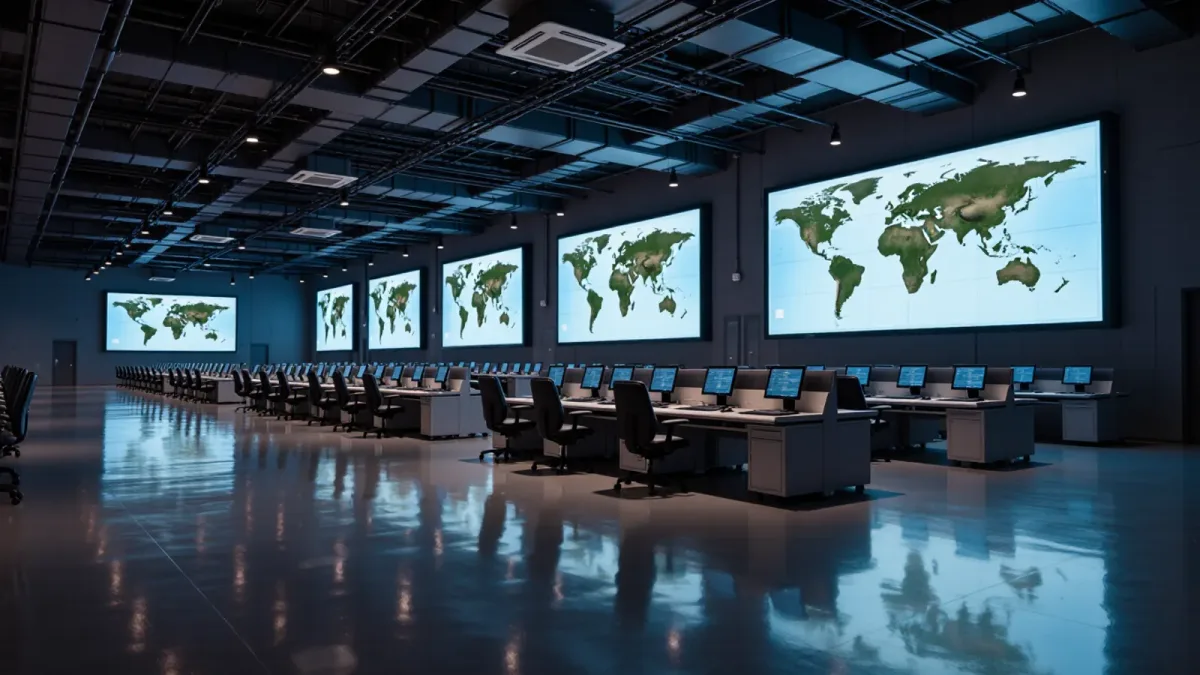
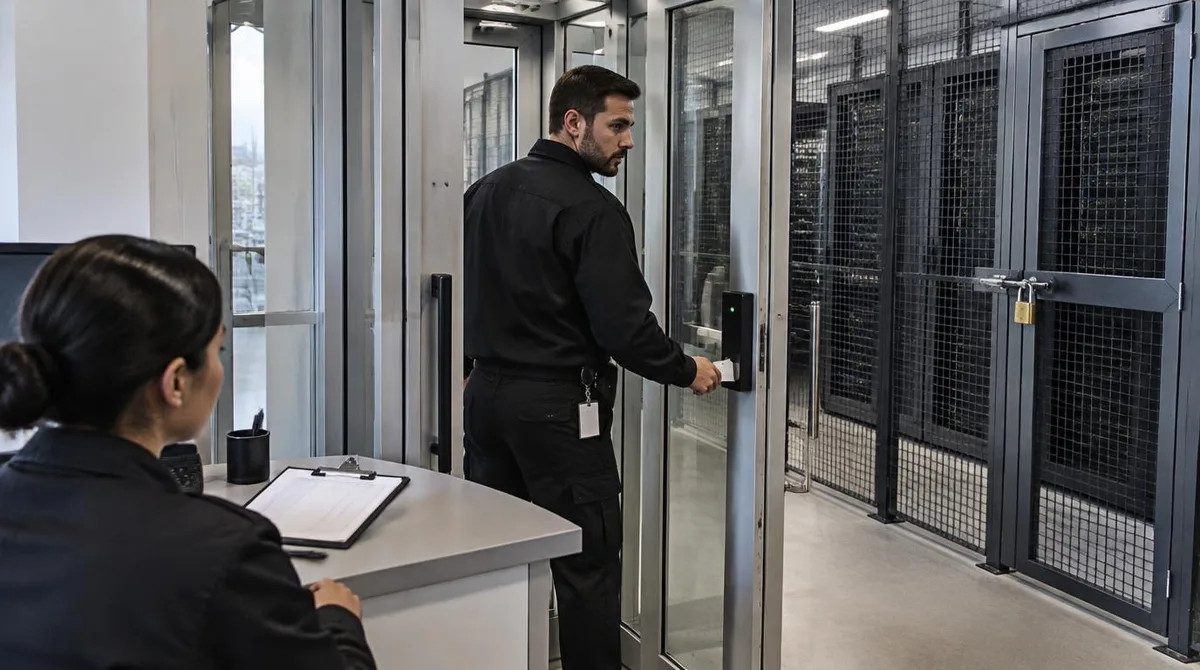
One door past the lobby sits the mantrap, a paired-door box that admits one person at a time. Badges plus a biometric check open both ends. Cameras watch the corridor corners, where coverage usually gaps first. Screens in the security room tile the feeds, and staff walk the rounds between them.
Colocation halls add tenant cages. A cage is a mesh room inside the hall, with its own lock and its own camera share. The operator controls the hall, and the tenant controls the cage. Contract terms draw that line, and audits check it. Cage keys stay with the tenant, logged out like library books, and lost keys trigger a re-key of the lock.
Inside the Rack and on the Wire
Racks lock, and keys or electronic access sit with the shift lead. Drives carry asset tags, and retired media gets destroyed under a chain of custody. Every destruction run leaves a certificate, and the paper trail survives the shred. On the wire, traffic segments by tenant, and logs flow to a separate store that attackers cannot easily reach.
The outside view gets tested too. CISA runs free cyber hygiene scanning that checks internet-facing assets and sends weekly reports. The edge is part of the site, and data center security includes the addresses an attacker can already see. We covered a connected angle in The Data Center Technician: Role, Shifts and Career Path.
Conclusion: The Layer Audit
Audit any site with a walk, not a slide deck. Count the locked doors between the street and a server. Ask how long camera footage and access logs are kept, and ask who reviews them. Then ask for the last seam test, where one team pokes another team's layer. Sites that answer in specifics pass. Sites that answer in adjectives do not.