
Data center jobs split into floor work, office work and remote work, and the pay spreads just as wide. Federal wage data makes the spread plain. Computer support specialists earned a median of $62,890 in May 2025, per BLS. Network and systems administrators earned $99,130. Information security analysts earned $129,180. The building runs on the first group. The second and third groups design and defend what the first group racks.
The mix keeps growing with the buildings. Berkeley Lab reports rapid growth in demand from data centers. Each new hall needs staff to build, run and watch it. Hiring has become steady enough to treat as a careers market, not a niche.
Data Center Jobs on the Floor
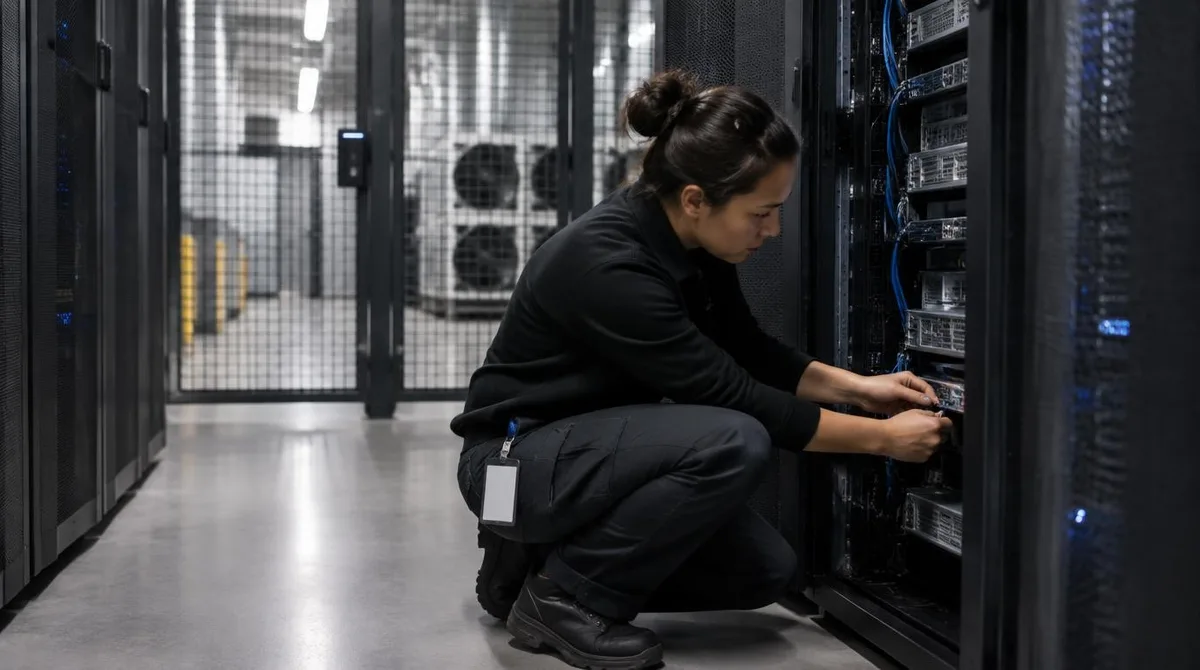
Floor staff touch the hardware. Technicians rack servers, run cable, swap failed drives and escort vendor crews. Facilities techs keep the power and cooling alive, from air handlers to switchgear. Shifts run around the clock, and weekends rotate through the team.
The badge decides access. A technician may reach one hall and no other, and every door logs a name. The work is physical, scripted and audited. Sites want calm hands, since one wrong cable can drop a customer. The pace also varies with the build calendar. New halls mean months of installs, then quieter years of watch work.
The Remote and Office Roles
A layer above the floor sits the network operations center. Staff there watch dashboards, answer alarms and open tickets. Some of that work runs remote, though many sites still want bodies near the glass for bad nights.
Office roles round out the payroll. Capacity planners track power and space. Procurement staff chase servers and gear amid long lead times. Security teams, finance teams and account managers support the operation. Cloud engineering sits closest to the customer, since tenants rent remote capacity by the hour. Pay bands follow the badge level, not the job title. Readers following this should also see Cloud Computing Explained: The Model, the Layers, the Money.
The split between floor and desk varies by operator. Hyperscale campuses run huge fleets with lean floor crews and thick engineering benches. Colocation halls lean the other way, with more hands on site and fewer software staff in house. Neither shape is better. Each shape hires differently, and candidates should notice which shape an employer has before applying.
Pay, per Federal Wage Data
BLS maps these roles to broader occupations, and the medians bracket the market. The floor often pays near the support specialist median of $62,890. Skilled facilities trades land higher, given the electrical license. Remote network staff track the administrator median near $99,130, and security staff track higher still.
Shift differentials matter on the floor. Nights and weekends can add a premium to the base rate. Data center jobs also tend to carry steady overtime during outages and migrations. Candidates should price the whole schedule, not just the salary line. A base rate with no rotation premium can lose money against a lower base that pays nights well.
Getting In: Skills and Ladders
Entry needs less schooling than the office roles. Many floor jobs ask for a certificate, a clean record and mechanical sense. The ladder then runs from technician to specialist, then to operations or facilities management.
Training programs help. The Energy Department backs a Data Center Energy Practitioner course through Berkeley Lab. Vendor certificates cover hardware and networking, and community colleges now teach data center operations directly. Staff who learn both power and compute move up fastest, because few people speak both languages.
Conclusion: The Hiring Signal
Judge any posting by what it states plainly. A fair posting names the shift, the rotation and the pay band. It also names the ladder out of the role. Count the postings that hide all three. That count measures an employer better than any recruiting video, and it costs nothing to check.