
SaaS sales runs as a repeatable motion, not a lone hunt. Teams work named stages: qualify, demo, pilot, close, then renew. Each stage carries a metric, and the metrics stack into annual recurring revenue. The craft differs from old license selling because the deal never truly ends. Renewal is the product, and every quota plan reflects that.
The pay reflects the craft. Federal data shows wholesale and manufacturing sales representatives earned a median of $76,460 in May 2025. Those selling technical and scientific products earned $104,920, which sits closest to the enterprise software lane. Base salaries plus commission remain the standard package. We covered a connected angle in NYDFS Cyber Guidance Pushes Vendors, AI and Quantum Into Risk Assessments.
SaaS Sales as a Factory, Not a Hunt
The factory metaphor is exact. Leads arrive like raw stock. Development reps qualify them. Account executives run the deals. Customer success managers keep the base warm, and renewals feed the machine again. Each station owns one conversion rate.
Two motions share the floor. Self-serve sells small teams through a website, with little human touch. Enterprise SaaS sales carries security reviews, procurement and legal, sometimes for months. Pricing and staffing follow the motion, and firms that mix the two without clear lanes stall in the middle. For related coverage, see B2B SaaS Explained: The Model and Its Failure Modes.
The Stages of the Motion
Stages give the pipeline its shape. A lead becomes marketing qualified on engagement, then sales qualified on fit. The demo tests the problem match. The pilot proves the product inside real workflows, with success criteria written before the trial starts.
Close and onboarding decide everything after. A signed contract that never activates becomes churn inside a quarter, and the commission still gets paid unless terms claw it back. Security review joined the stage list years ago and now gates most enterprise deals, so pipeline math needs a slot for it.
Stage discipline is the whole craft. Reps who skip stages buy themselves delays later. A demo without a stated problem wastes an hour. A pilot without a named executive sponsor stalls at signature. The best teams enforce stage exits like quality gates on a line, and their forecasts bend less for it.
The Metrics: ARR, CAC, NRR
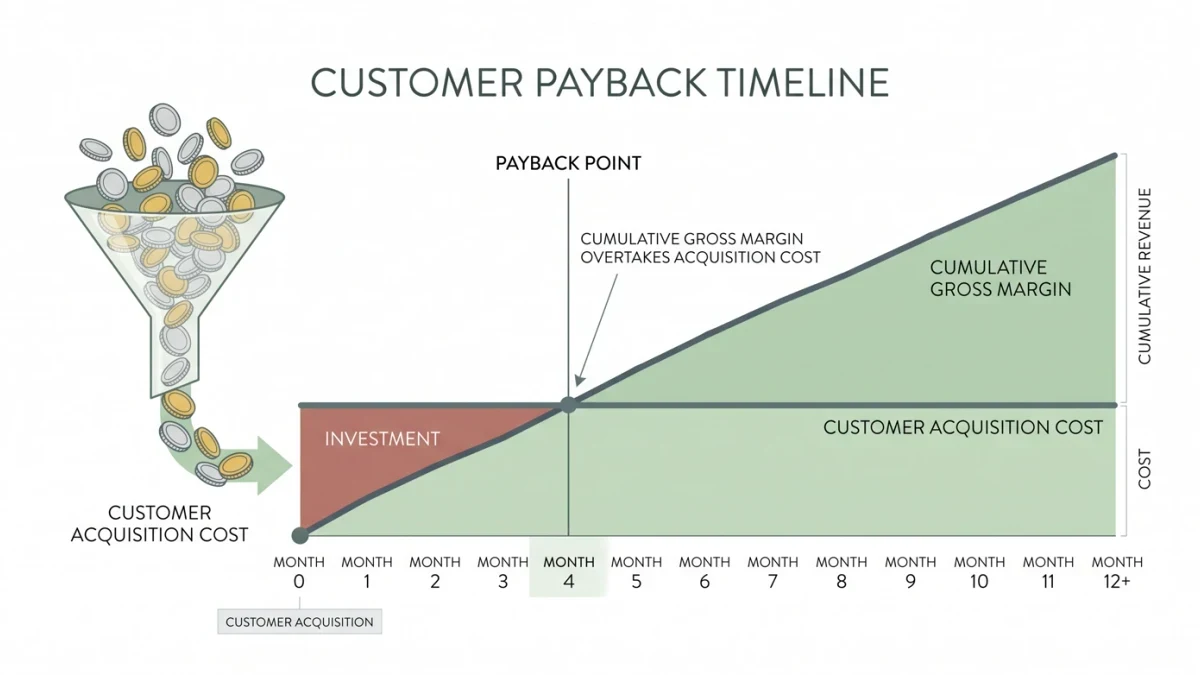
Three acronyms run the scoreboard. Annual recurring revenue measures the base. Customer acquisition cost measures the spend to add each customer. Net revenue retention measures growth inside the existing base, after churn and expansion net out.
Benchmarks frame the numbers. SaaS Capital, which surveys private software firms yearly, reported a median growth rate of 22 percent in its 2026 survey, down from 25 percent. The read matters more than the digits: slowing growth shifts weight from new logos toward expansion, and quota plans follow the money.
Each metric has a failure mode of its own. ARR can grow while profits shrink, since discounts bought the growth. CAC can look cheap while leads rot in the queue. NRR can top 100 on price rises alone, with usage flat. Sound operators read the three together, monthly, with the cohorts in view.
Churn Math for the Sales Lead
Churn punishes quietly. A base losing 2 percent per month loses roughly a fifth of its customers in a year. Halve that leak to 1 percent, and the annual loss drops to about an eighth. The arithmetic explains why retention bonuses now rival new-business commissions.
Reps should run one subtraction each month. Take gross added revenue, subtract churned revenue, then divide the net figure by the cost of the team. That single line shows whether the factory earns its floor space, and it needs no investor deck to compute.
Conclusion: The Pipeline Test
Test any SaaS sales operation with one calculation. Divide the fully loaded cost of a rep by the gross margin that rep adds per month. Then trend that payback figure across four quarters. Falling payback with steady conversion marks a healthy motion. Rising payback with flat pipeline marks a treadmill, whatever the revenue chart shows.