
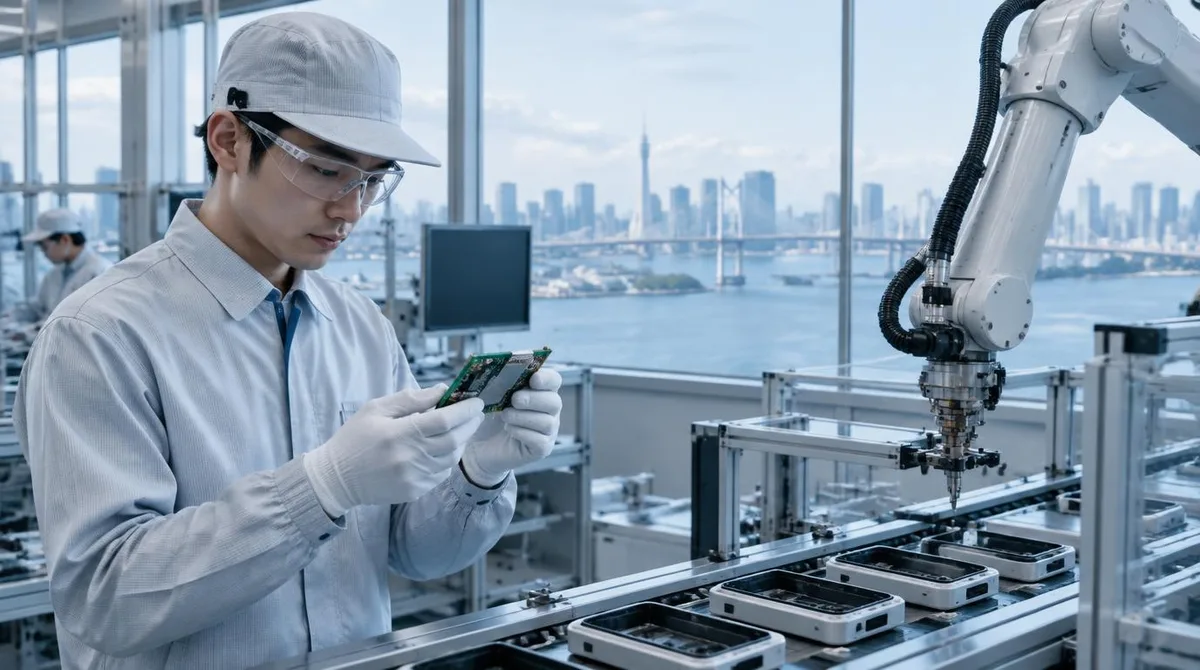
What does Sony Global Manufacturing & Operations Corporation actually do? In short, SGMO is the part of Sony that connects design, production engineering, procurement, manufacturing, logistics and customer service across the full life of a product. According to The Worldfolio, the company's stated job is to turn Sony's group purpose into working products, services and long-term support.
The most useful term for understanding SGMO is monozukuri. It is a Japanese word that, in Sony's usage, covers far more than factory work. Hirokuni Miyai, president of SGMO, defines it as including software, services, environmental initiatives and everything that surrounds a product. The point is that making a thing well is only part of the job; keeping it useful for the customer is the rest.
This matters to anyone tracking how large electronics companies are reorganizing around sustainability and longer customer relationships. Sony has expanded beyond traditional electronics into entertainment, creator tools and imaging technologies, and SGMO sits underneath that shift. For more coverage of this kind of operational change, see our tech news section. For related coverage, see A Working List of AI Cybersecurity Tools by Function.
What is monozukuri, and why does Sony use the word?
Monozukuri literally refers to the craft of making things. Sony stretches the definition on purpose. In an interview with The Worldfolio, Miyai argues that monozukuri extends beyond manufacturing to include service, customer support and the trust that keeps customers choosing Sony over many years.
The company frames this under the Sony Group Purpose: "Fill the world with emotion, through the power of creativity and technology." Sony Corporation, which runs the Entertainment, Technology & Services business, carries the mission of co-creating the future of entertainment with creators through technology. SGMO's role is to make that real through monozukuri, which the company says includes creating Kando — a Japanese term for emotional response — while contributing to a sustainable society.
The practical translation: SGMO treats the product lifecycle as one connected chain rather than separate departments. Design talks to production engineering. Production engineering talks to procurement. Logistics and customer service feed observations back into the next product. Sony claims this connection is what continuously improves quality, reliability and customer value.
Why does SGMO join product design so early?
Most companies bring environmental thinking in late, after the design is locked. SGMO says it does the opposite. Its teams join discussions at the earliest stages of development, covering materials, energy consumption, product architecture and environmental impact before production begins.
That early involvement shows up in concrete choices. According to The Worldfolio, these include reducing virgin plastics and increasing recycled plastics, cutting power consumption, selecting components and shaping the overall product structure.
The reasoning is straightforward. If a company asks whether a product can be disassembled, whether components can be reused and whether materials can return to the production cycle only after development, the available answers are limited. Ask during initial design, and the whole life cycle can be planned in. SGMO describes this as a circular approach where manufacturing knowledge, materials and processes feed back into each next generation of products.
The claimed results are reduced waste, lower carbon emissions, better recycling and less environmental impact, while still meeting customer expectations. These are the company's own characterizations of its program, not independent measurements.
How does SGMO balance sustainability against cost?
Sustainability programs often get framed as a cost burden. Miyai rejects that framing. His position is that the environment is something a company creates, so spending on it is an investment in the future rather than an overhead line.
But he is candid about the tradeoffs. Environmental initiatives cost money. It is impossible to do everything. The stated rule is balance: do not create disadvantages for customers, do not stop an initiative just because it costs more, and do not pursue something just because it costs less. Instead, SGMO says it weighs environmental benefits, technical possibilities, customer value and long-term factors together. The interview text provided cuts off mid-sentence at that point, so the full balancing framework is not available in the retrieved material.
Why creators sit at the center of the strategy
SGMO now names support for creators as one of its most important missions. The logic runs through professional users. Creators who produce work that moves audiences need more than advanced features. They need reliability, quality and support that let them use a product with confidence over many years. This connects to our earlier piece, Cybersecurity Internships: How Programs Work and Who Gets In.
That reframes what "manufacturing" means for Sony. The company says its responsibility does not end when a product ships. Work is complete only when the product reaches the customer and creates an emotional experience. Long-term service and support become part of the manufacturing job, not an afterthought handled by a different division. Readers interested in how AI is reshaping enterprise operations can follow our ai-machine-learning coverage.
What should operations readers take from this?
The transferable idea is structural, not sentimental. SGMO's model treats design, procurement, production, logistics and customer service as one system with feedback loops. Environmental questions enter at design time, where options are cheapest to change, rather than at end of life, where they are most expensive.
The operational takeaway for this quarter: if your organization treats sustainability as a post-design compliance task, the SGMO example argues for moving those decisions upstream, into the earliest development conversations, and for measuring support and service as part of product quality rather than separately from it.